
Audience Targeting Strategies That Improve ROAS










It’s not always a victory to increase the number of people who see an ad. If those impressions are from individuals who are not interested in the product, there could be a lot of activity, but little revenue for the campaign.
This is where audience targeting comes in handy. The objective is not to get the most people to view it. It’s important to know who is most likely to act on your message and ensure that your advertising dollars are being spent on them.
The beginning of strong ROAS optimization strategies is usually that one simple mindset change: Do not treat every potential customer as the same.
Start With Intent
Don’t assume that your first-time visitor is a new user of your brand, as they may not be.
Consider where customers are in the buying process. You have to create new prospects to introduce them to your product, and you have to remind your existing ones, strengthen your call to action, or provide a clinching reason to purchase, or answer questions that were left unanswered that held them back.
The more the message aligns to the user’s intent, the more useful the advertising is.

Use What Customers Tell You
You can find out more from your existing customer data than you can from a general set of customer demographics.
History of purchases, browsing, interests, ad interaction, and re-purchasing are all great ways of identifying valuable audience groups. These signals help differentiate between people who clicked on an advertisement and those who are likely to bring revenue.
First-party data is especially valuable because it is generated directly from your brand.
Stop Treating Everyone Alike
If one of your customers bought your product yesterday, they don’t have the same relationship with your brand as someone who has yet to be introduced to it.
Create individual audience segments based on meaningful actions. You could have different messaging for product viewers, cart abandoners, and high-value repeat buyers, for instance, as well as for first-time visitors and existing customers.
It’s not about making dozens of small audiences. The idea is to develop segments that vary sufficiently to justify different messages.

Follow the Better Performers
When campaigns are in production, the data will give you information on which audiences to pursue.
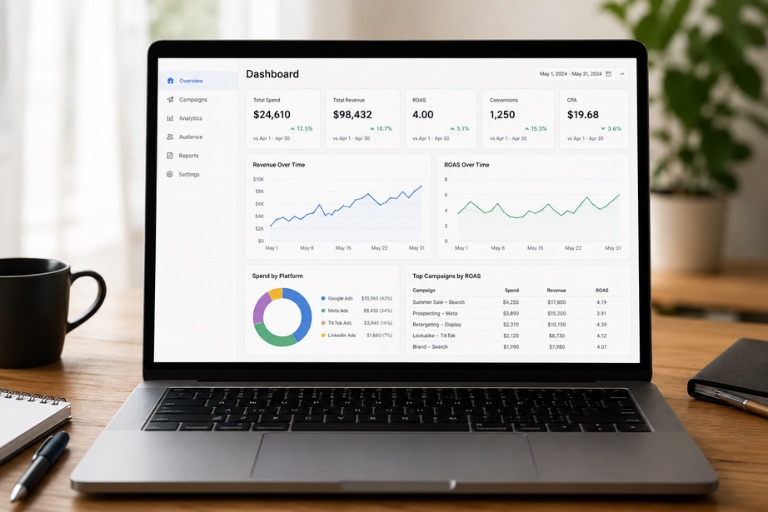
Look beyond clicks. Analyze conversion rates, revenue, acquisition costs, and overall ROI of ad spend. Even if the audience is not generating as many clicks, it may be much more valuable if the audience is the source of better customers.
This is where targeting and ROAS come together. Don’t automatically direct more money to the audience that is bringing in the most traffic, direct it to those that are bringing in the most business.

Keep Testing the Audience
Audience behavior changes. What is successful in one season can be unsuccessful in another, what is successful with new customers can be unsuccessful with repeat customers.
Continue testing audience segments, creative, offers and messaging. If there’s a reason in the data, make changes, but don’t make changes just because a campaign has been running for a while.
These little tweaks can make a big difference and transform audience targeting from a campaign setting into a growth lever over time.

Audience Targeting Strategies That Improve ROAS
Ready to Get More From Your Ad Spend?
A higher ROAS doesn’t always require less spend. Sometimes it’s a matter of being more selective about where that spend goes.
Brill Media assists brands in leveraging audience insights, campaign data and continuous testing to create advertising strategies that target higher-value audiences and enhance overall campaign efficiency.

Audience Targeting Strategies That Improve ROAS
Supercharge your performance media buying 🚀